
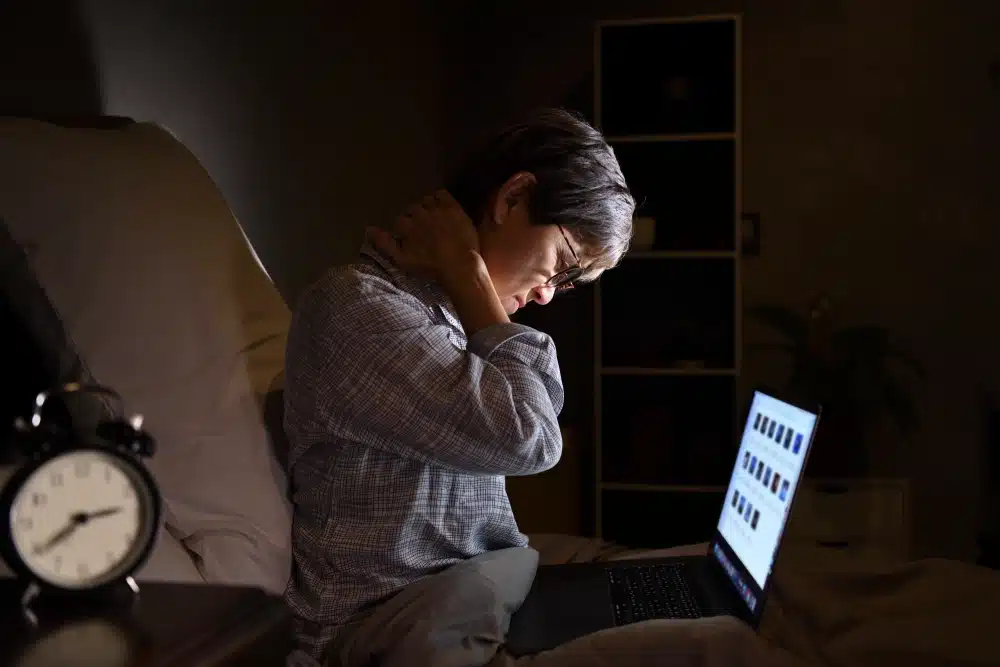
Why Nerve Discomfort Can Feel More Noticeable At Night
Nighttime nerve discomfort may feel stronger when daily distractions fade, certain sitting or sleep positions place pressure on nerves, and the body’s pain sensitivity shifts across the 24-hour cycle. Occasional tingling may be temporary, but frequent, persistent, or worsening symptoms should be evaluated.
Nighttime nerve discomfort can feel louder once the day gets quiet. Tingling, burning, prickling, numbness, or “pins and needles” in the hands, feet, or legs may become harder to ignore after you settle in, even when the sensation was present earlier in the day.
That does not mean every nighttime sensation has the same cause. Attention, body position, activity, and underlying conditions can all play a role, so patterns that persist or worsen deserve medical guidance.
During the day, work, movement, conversations, and other sensory input compete for attention. When those distractions fall away, sensations that were easier to ignore may become more noticeable.
This change in awareness can help explain why symptoms seem to “turn up” in the evening, but it does not prove that a nerve problem has suddenly become worse.
Your Circadian Rhythm Can Affect Pain Sensitivity
Pain perception also changes across the day. A controlled study found that human pain sensitivity follows a circadian rhythm, with sensitivity peaking overnight and reaching a lower point later in the day.¹
The study was not specific to nerve discomfort, so it should not be used to diagnose a nighttime symptom. It does, however, support the broader point that time of day can influence how strongly discomfort is perceived.
Your own pattern may be different. Keeping track of when symptoms start, what you were doing beforehand, and whether changing position helps can provide useful context if you discuss the issue with a healthcare professional.
Body position is another common reason tingling becomes noticeable at night.
Temporary paresthesia can happen when a position puts pressure on a nerve or limits blood flow, causing a limb to feel numb, tingly, or “asleep.”²
Sleep and Sitting Positions Can Put Pressure on Nerves
Crossing your legs, leaning on an arm, or sleeping on a limb can trigger short-lived pins-and-needles sensations that usually ease after you change position. Theraworx also explains common pinched nerve symptoms and how nerve compression can affect different parts of the body.
If the same area tingles every night, experiment with neutral positioning, avoid prolonged pressure, and change positions periodically. Persistent symptoms can also occur with nerve compression and other conditions, so do not assume posture is always the explanation.
For additional self-care ideas that may complement professional guidance, review these at-home options for pinched nerve discomfort.
The key distinction is duration: brief tingling that resolves after moving is different from symptoms that remain, recur frequently, or are getting worse.
A Long Day Can Make Symptoms Easier to Notice
Long periods of standing, walking, repetitive hand use, or sitting can leave the body fatigued by evening. If a nerve is already irritated, repeated pressure or motion may make symptoms easier to notice once you rest.
A simple symptom log can be useful: note the time, body position, activity earlier in the day, and whether movement changes the sensation. Patterns can help a clinician narrow down possible causes if symptoms persist.
When Nighttime Tingling Needs Medical Attention
Frequent or constant paresthesia should be discussed with a healthcare professional. MedlinePlus notes that persistent or unexplained numbness and tingling can have many causes, including nerve compression, neuropathy, circulation problems, and other conditions that may need evaluation.²
Get urgent medical help for sudden numbness or tingling accompanied by weakness or paralysis, confusion, difficulty speaking, severe headache, or dizziness.³ Numbness or tingling after a significant head, neck, or back injury also warrants urgent evaluation.²
Ways to Support Everyday Nerve Comfort
Regular movement, position changes, gentle stretching, and avoiding long periods of pressure on one area may help with occasional positional symptoms. You can also browse Theraworx Helpful Tips for additional wellness guidance or explore the full range of Theraworx® products.
Theraworx® Nerve Relief Foam is made with St. John’s Wort, Bloodroot, and Onion* and is designed to help relieve occasional nerve discomfort and soothe aggravated nerves. The fast-acting foam is quick-drying, has no added fragrance or strong odor, and can be used on hands, feet, and other affected areas as directed.
A topical product can be one part of a comfort routine, but persistent burning, tingling, weakness, or numbness should be evaluated so the underlying cause is not overlooked.
*The active ingredients in this product are officially monographed in the Homeopathic Pharmacopoeia of the United States (HPUS). Claims based on traditional homeopathic practice, not accepted medical evidence. Not FDA evaluated.
Disclaimer: This article is for informational purposes only and is not intended as medical advice. Always consult a qualified healthcare professional for diagnosis, treatment options, and guidance specific to your situation.
FAQs
Why does nerve discomfort seem more noticeable at night?
Daily distractions fade at night, certain positions may place pressure on nerves, and circadian changes in pain sensitivity can influence perception. Those factors can make existing symptoms feel more noticeable without identifying the underlying cause.¹
Can sitting for long periods affect overall comfort?
Yes. MedlinePlus lists staying in one position for a long time and pressure on peripheral nerves among possible causes of numbness and tingling.² Changing positions and taking brief movement breaks may help if the sensation is positional, but persistent or unexplained symptoms should be evaluated.
What are some simple ways to support everyday nerve comfort?
Regular movement, avoiding prolonged pressure on one area, and changing positions periodically may help with occasional positional tingling. Persistent burning, numbness, weakness, or recurrent tingling should be discussed with a healthcare professional rather than managed only as a comfort issue.²
References:
- Daguet, I., Raverot, V., Bouhassira, D., & Gronfier, C. (2022). Circadian rhythmicity of pain sensitivity in humans. Brain, 145(9), 3225–3235. doi:10.1093/brain/awac147. https://doi.org/10.1093/brain/awac147
- MedlinePlus. (2025, April 16). Numbness and tingling. U.S. National Library of Medicine. https://medlineplus.gov/ency/article/003206.htm
- National Institute of Neurological Disorders and Stroke. (n.d.). Signs and symptoms of stroke. National Institutes of Health. https://www.ninds.nih.gov/health-information/stroke/signs-and-symptoms